How Long Does Radiofrequency Ablation Last?
If you have been recommended for radiofrequency ablation, or if you have already had the procedure and are wondering what comes next, one of the most common questions is: how long will the relief last?
The short answer is that radiofrequency ablation (RFA) typically provides relief for 6 to 18 months, and in some cases longer. But there is more to the story than a single number.
What RFA Does
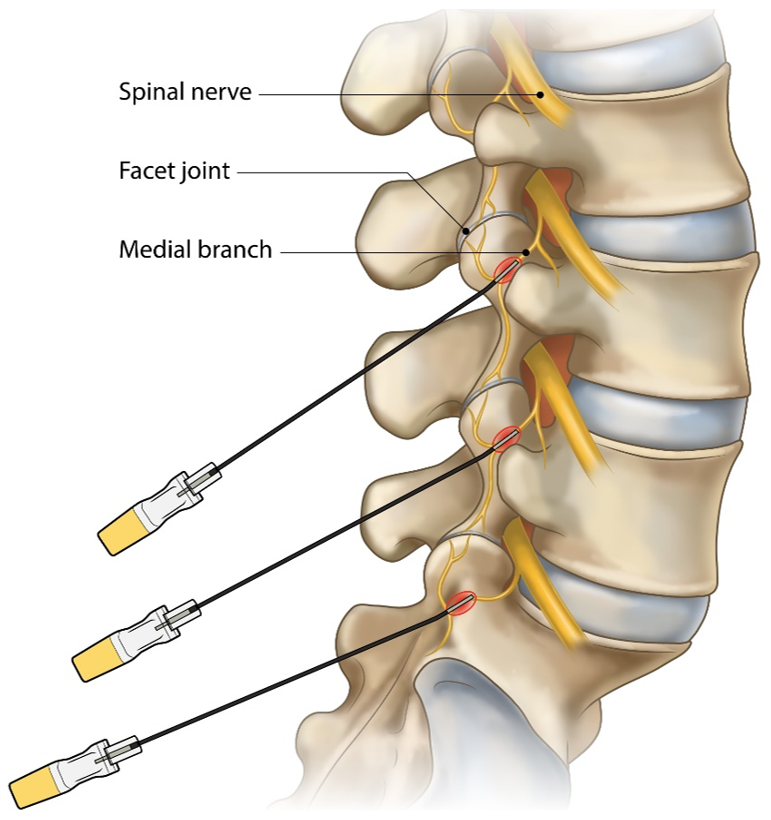
Radiofrequency ablation uses heat to disable the small nerves that are sending pain signals from a specific structure - most commonly the facet joints in the spine or the sacroiliac (SI) joint. The procedure does not fix the underlying arthritis or joint degeneration, but it interrupts the pain signal so you do not feel it.
Think of it like turning off an alarm. The condition that triggered the alarm is still there, but the alarm itself is no longer ringing.
How Long the Relief Typically Lasts
Most patients experience relief for somewhere between 6 and 18 months after RFA. The variation depends on several factors:
Which nerves were treated. Facet joint nerves in the lumbar spine tend to regenerate in a fairly predictable timeframe. Cervical (neck) nerves can behave slightly differently. SI joint ablations also have their own timeline.
Individual nerve regeneration. The nerves that are ablated will eventually grow back - that is normal and expected. How quickly this happens varies from person to person. Some patients get a year or more of relief, while others notice symptoms returning closer to 6 months.
How completely the nerves were treated. The success of the ablation depends on the precision of nerve targeting. This is one reason the procedure is done under fluoroscopy - live X-ray guidance allows the doctor to position the needle precisely along the nerve.
What Happens Before RFA
RFA is not the first step. Before you can have the procedure, you need to go through a diagnostic process to confirm that the nerves being targeted are actually the ones causing your pain. This is done with medial branch blocks (MBBs) - smaller diagnostic injections that temporarily numb the same nerves that would be ablated.
Most insurance companies require two sets of medial branch blocks that each provide significant temporary relief before they will authorize the ablation. This can feel like a slow process, but it serves an important purpose: it confirms that you are likely to respond well to the ablation. Patients who have strong relief from the diagnostic blocks tend to get the best results from RFA.
What Happens When It Wears Off
When the nerves grow back and pain returns, RFA can be repeated. Many patients go through multiple cycles of ablation over the years with consistent results each time. The procedure does not become less effective with repetition - in fact, some patients find that subsequent ablations last as long or longer than the first.
Depending on your insurance, you may or may not need to repeat the diagnostic medial branch blocks before each ablation. Some insurers require them every time, while others allow repeat ablation based on your documented history of prior success.
Is RFA Right for You?
RFA works best for pain that comes from the facet joints or SI joint. The most common pattern is chronic back pain or neck pain that is worse with leaning back, twisting, prolonged standing, or getting up from a seated position. If your pain fits this pattern and you have not had a good evaluation for facet arthritis, it may be worth asking about it.
RFA is generally not used for nerve-related pain like sciatica or radiculopathy - those conditions are typically treated with epidural injections or other approaches.
Radiofrequency Ablation in Castle Rock
Dr. Carrera is double board-certified in interventional pain medicine and physical medicine and rehabilitation. The practice performs RFA of the facet joints, SI joints, and genicular nerves for patients from Castle Rock, Parker, Lone Tree, Castle Pines, Highlands Ranch, Colorado Springs, and surrounding communities.Want to find out if RFA could help with your pain? Call 720-455-3775.